Best Resources for Women's Health

Women's health is not a single topic - it's a layered, lifelong conversation that shifts with age, hormones, stress, and biology. Finding the right resources can mean the difference between managing symptoms and truly thriving. The best women's health resources combine evidence-based medical guidance with real-world practicality. They speak to hormonal health, nutrition, mental wellness, and preventive care - not just reproductive issues. This guide breaks down what those resources look like, how to find them, and how to use them effectively at every stage of life.
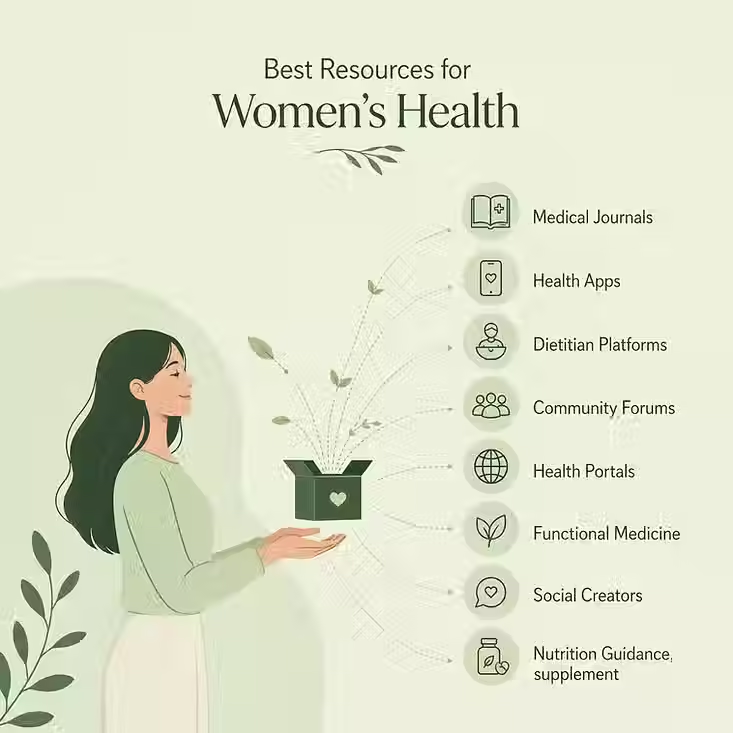
Table of Contents
1 | |
2 | |
3 | |
4 | |
5 | |
6 | |
7 | |
8 | |
9 | |
10 | |
11 | |
12 |
Women's Health Resource Comparison Table
Resource Type | Best For | Evidence Level | Accessibility |
Medical journals & research | Deep, clinical understanding | High | Moderate |
Health-focused apps | Daily tracking & habits | Medium | High |
Registered dietitian platforms | Nutrition & deficiency guidance | High | Moderate |
Community forums (moderated) | Lived experience & peer support | Experiential | High |
Government health portals | Preventive care guidelines | High | High |
Functional medicine platforms | Root-cause approaches | Medium-High | Moderate |
Social media health creators | Awareness & basic education | Variable | Very High |
Why Women's Health Needs Dedicated, High-Quality Resources Today
The Shift in Women's Health Awareness Across Generations
Something changed in how women talk about their health - and it happened fast. A generation ago, women were handed generic advice that rarely reflected their biology. Today, conversations around menstrual cycles, perimenopause, PCOS, and postpartum mental health happen openly and loudly. Research on female-specific physiology has grown, but access to reliable information hasn't kept pace with the demand. Women are now informed consumers who expect their healthcare resources to match their complexity - not reduce them to simplified checklists. That shift is powerful, but it also creates noise. Not all of what's available is accurate.
Hidden Gaps in Traditional Health Information for Women
Here's something many people don't realize: most foundational medical research has historically been conducted on male subjects. Drug dosages, cardiovascular risk profiles, even pain response studies - many were built on male data and applied universally. This created blind spots that affected how women's symptoms were diagnosed and treated for decades. Iron deficiency, thyroid disorders, and autoimmune conditions - which disproportionately affect women - were often under-investigated. Those gaps are slowly closing, but they still exist. Resources that acknowledge this history and work around it are inherently more valuable for women seeking real answers.
Why General Advice Fails to Address Female-Specific Needs
"Eat well, exercise, sleep more" - technically correct, completely incomplete. Women's health needs fluctuate with the menstrual cycle, with pregnancy, with perimenopause, with stress levels and cortisol patterns. Blanket advice ignores how estrogen affects everything from bone density to mood to cardiovascular function. A 22-year-old athlete and a 47-year-old navigating hormonal shifts may both need nutritional guidance, but the specifics are worlds apart. Resources that account for life stage, hormonal context, and individual variation serve women far better than generic wellness content ever will.
Understanding the Core Pillars of Women's Health
Hormonal Balance and Its Long-Term Impact
Hormones are not just a reproductive issue - they are a full-body system. Estrogen influences heart health, bone density, cognitive function, and mood regulation. Progesterone affects sleep quality and anxiety levels. Thyroid hormones control metabolism and energy. When these systems are in balance, women often feel their best. When they're disrupted - by stress, poor nutrition, or life transitions - the effects are widespread and sometimes misdiagnosed. Understanding hormonal health as a lifelong priority, not just a concern during pregnancy or menopause, is one of the most important shifts women's health resources can support.
Nutrition, Deficiencies, and Lifestyle Interconnection
Iron, magnesium, Vitamin D, B12, and folate are among the most commonly deficient nutrients in women worldwide. Each deficiency has cascading effects - fatigue, brain fog, mood changes, immune dysfunction. But nutrition isn't just about supplements. It's about understanding how lifestyle patterns - sleep, stress, activity levels - interact with what you eat and how your body absorbs it. A woman under chronic stress, for example, depletes magnesium faster. Resources that treat nutrition as interconnected with lifestyle rather than a standalone checklist are the ones that drive lasting change.
Mental, Emotional, and Physical Health Integration
Women are about twice as prone as men to suffer from anxiety and depressive disorders. Yet mental health is still often treated separately from physical health in mainstream resources. The two are inseparable. Chronic physical symptoms worsen mental health. Anxiety disrupts hormonal balance. Postpartum depression affects physical recovery. The most useful women's health platforms are those that hold all three - mental, emotional, and physical - in the same frame. Integrative approaches that see the whole person, not just the symptom, tend to produce both better understanding and better outcomes.
Common Health Challenges Women Face Across Life Stages
Teenage to Early Adulthood: Foundational Health Concerns
This is where habits form and where misinformation does the most damage. Young women face menstrual irregularities, body image pressures, hormonal acne, and often undiagnosed conditions like endometriosis or PCOS that go years without proper attention. Nutritional gaps in iron and calcium begin here, often silently. Resources targeting this group need to be accessible, shame-free, and medically grounded. What teenagers learn about their bodies now shapes how they advocate for themselves in healthcare settings for the rest of their lives.
Working Women: Stress, Fatigue, and Nutritional Gaps
Burnout in working women is not just psychological - it's physiological. Cortisol dysregulation from chronic stress disrupts sleep, appetite, immune function, and fertility. Skipped meals and reliance on stimulants create nutritional gaps that compound over time. Many working women experience fatigue, brain fog, or irregular cycles and accept them as normal when they're actually signals worth investigating. Health resources that understand the working woman's actual life - not an idealized wellness fantasy - are the ones she'll actually use and benefit from.
Pregnancy, Postpartum, and Recovery Phases
Pregnancy information is abundant. But postpartum care? That remains one of the most underserved areas in women's health. Physical recovery from birth can take 12 to 18 months. Postpartum thyroiditis, nutrient depletion, diastasis recti, and postpartum depression are real and common - and routinely under-addressed. Women deserve resources that go beyond the six-week check-in and treat postpartum recovery as the significant physical event it truly is.
40+ Women: Hormonal Shifts and Preventive Care
Perimenopause can begin as early as the late 30s and lasts years before actual menopause. During this time, sleep quality declines, weight distribution changes, anxiety increases, and cardiovascular risk rises. Yet many women are dismissed or misdiagnosed during this phase. High-quality resources for this life stage should address hormonal transitions directly, alongside bone health, metabolic changes, and mental sharpness - without sensationalizing aging or oversimplifying complex biology.
Types of Resources That Actually Support Women's Health
Educational Platforms and Evidence-Based Information
Government health portals, academic medical centers, and research-backed digital platforms provide the foundation. Sites affiliated with research institutions - women's health divisions at major hospitals, for instance - offer reliable clinical content. Look for platforms that cite sources, employ medical reviewers, and update their content regularly as science evolves. These are the anchors that everything else should be verified against.
Nutritional and Supplement-Based Support Systems
Registered dietitians specialising in women's health, functional nutrition platforms, and evidence-reviewed supplement guidance all fall here. The key is specificity - women's nutritional needs vary significantly by age and life stage. A resource that treats iron supplementation the same for a 19-year-old and a 55-year-old is cutting corners. The best platforms personalise guidance and acknowledge when professional testing is needed before recommending any intervention.
Preventive Health and Lifestyle Optimisation Tools
Wearables, cycle tracking apps, sleep monitors, and health journals all support proactive care when used correctly. The most valuable tools are those that help women spot patterns over time - connecting, say, poor sleep to cycle phase, or energy dips to specific nutritional gaps. Used alongside professional guidance, these tools can make a real difference in catching early signs of hormonal imbalance or nutritional deficiency before they escalate.
Community-Driven and Experience-Based Learning Sources
Peer support is underrated in women's health. Moderated online communities, patient advocacy groups, and condition-specific forums offer something clinical resources often can't - lived experience. Understanding how others manage PCOS, navigate perimenopause, or recover postpartum provides context that no research paper delivers. These communities are most valuable when paired with evidence-based guidance and when moderated to prevent the spread of harmful misinformation.
The Platforms and Apps Women Actually Need - and Why They're Worth Trusting
This is where most women get stuck. You know you need better information. But the internet is full of conflicting advice, and it's not always obvious which sources have clinical weight behind them and which ones are just well-designed marketing. Here's a breakdown of platforms and apps that earn their place in a serious women's health toolkit - and exactly why each one matters.
Government and Institutional Portals: The Non-Negotiable Starting Point
The NIH Office of Research on Women's Health (orwh.nih.gov) is one of the most underused resources available to women. It publishes condition-specific guides, clinical trial findings, and policy updates that directly affect female health outcomes. The Office on Women's Health (womenshealth.gov) goes further - offering life-stage-specific content on hormones, nutrition, mental health, and chronic conditions, all written for a general audience without dumbing down the science. These are free, frequently updated, and carry the institutional credibility that no wellness brand can manufacture. For women in India, the National Health Portal (nhp.gov.in) offers condition guides and referral pathways relevant to local healthcare systems.
Why they matter: When a wellness influencer says something that sounds off, these portals are where you go to check. They don't sell anything. They don't have a supplement line. They exist purely to publish vetted health information - which makes them the most reliable anchor in your resource stack.
Clue and Flo: Cycle Tracking That Goes Beyond Dates
Clue (helloclue.com) is built on actual menstrual research from a team that includes medical advisors and clinical scientists. It tracks cycle length, symptoms, mood, and physical patterns - and over time, reveals correlations that help women understand what's normal for their own body. The data stays private, the interface doesn't moralize, and the underlying algorithm is regularly reviewed against real research. Flo (flo.health) covers a broader audience - from first periods through perimenopause - and includes a medically reviewed health library with content on PCOS, endometriosis, hormonal acne, fertility, and menopause. Both apps have been downloaded by hundreds of millions of users, but more importantly, both consistently publish their methodology and work with medical consultants.
Why they matter: Pattern recognition is everything in women's health. A woman who can show her doctor three months of logged symptoms, cycle length variations, and mood data walks into that appointment with evidence - not just a vague complaint. These apps turn daily observation into medically useful data.
Zocdoc and Practo: Closing the Access Gap
Finding a doctor who actually understands female-specific health concerns - whether that's a gynaecologist who takes PCOS seriously, a thyroid specialist, or a nutritionist who understands perimenopause - has historically been a time-consuming, frustrating process. Zocdoc (zocdoc.com) in the US and Practo (practo.com) in India both aggregate verified specialist profiles with real patient reviews, insurance filtering, and same-week booking options. They don't replace clinical care - they make accessing it significantly faster and less random. For women managing conditions that require specialist input, this matters enormously.
Why they matter: The best information in the world doesn't help if you can't get in front of a doctor who understands it. These platforms reduce the friction between knowing you need specialist care and actually getting it.
Headspace and Calm: Mental Health Is Women's Health
Women are about twice as prone as men to experience anxiety and depression. Yet standalone mental wellness apps are often treated as optional add-ons rather than core health tools. Headspace (headspace.com) and Calm (calm.com) are both clinically reviewed platforms that offer guided meditation, sleep tools, and stress reduction programs backed by published research partnerships with universities. Headspace, in particular, has conducted and published clinical studies on its own programs - an unusual level of transparency for a consumer app. Neither replaces therapy, and neither claims to. But for daily stress regulation, sleep improvement, and cortisol management - all of which directly affect hormonal health - consistent use of these tools produces measurable differences.
Why they matter: Chronic stress depletes magnesium, disrupts estrogen balance, and accelerates bone loss. A mental wellness app that helps a woman reduce her daily cortisol load is, by extension, a hormonal health tool. The categories are not separate.
PubMed and Examine.com: For Women Who Want to Go Deeper
When a supplement is recommended, when a diet protocol sounds compelling, when a new study makes headlines - PubMed (pubmed.ncbi.nlm.nih.gov) is where you check the source. It's the world's largest database of peer-reviewed biomedical research, and it's completely free to search. The interface takes a little getting used to, but it's accessible without a medical degree. For nutrition and supplement-specific research, Examine.com goes further - it aggregates clinical evidence on specific compounds, ranks study quality, and presents findings in plain English without a commercial angle.
Why they matter: Wellness misinformation spreads because most people never check the actual research. These platforms make it possible to verify any claim in under five minutes. That's not a small thing - it's the difference between spending money on something that works and spending it on something that was marketed well.
Reddit Communities: Peer Wisdom With Caveats
Subreddits like r/PCOS, r/Perimenopause, r/VitaminGreen/ r/TryingForABaby, and r/WomensHealth carry something no clinical resource can fully replicate - the accumulated lived experience of thousands of women managing the same conditions in real life. The quality varies, and no advice from a forum should replace professional consultation. But for understanding what perimenopause actually feels like week to week, or how real women have navigated PCOS diagnosis, or which symptoms are commonly under-addressed by GPs - these communities are invaluable. The key is to treat them as supplementary context, not primary guidance.
Why they matter: Health decisions happen in the real world, not in clinical settings. Women who enter a forum already knowing the evidence-based basics can extract enormous value from peer experience - using it to ask better questions rather than replace medical advice.
Health Podcasts Worth Your Time
The podcast format has become one of the most accessible delivery systems for serious women's health content. Huberman Lab (available on all major platforms) regularly features episodes on female hormones, sleep, nutrition, and mental health, with guests who are active clinical researchers. The Doctor's Kitchen Podcast focuses on nutrition science with a functional medicine lens - practical, cited, and applicable. For perimenopause and menopause specifically, Dr. Mary Claire Haver's content (available on YouTube and podcast platforms) translates recent clinical research into direct, actionable guidance. The value of these formats is depth - a 90-minute conversation about cortisol and thyroid function covers ground that a 500-word article cannot.
Why they matter: Passive learning fits real life. A woman who listens to a well-researched episode on iron deficiency during her commute arrives at her next GP appointment better informed than one who read three conflicting social media posts on the same topic.
How to Identify Reliable and Effective Health Resources
Signs of Trustworthy, Science-Backed Information
Reliable resources cite peer-reviewed studies, list credentials of contributing writers, disclose funding sources, and update content when science changes. They don't oversimplify complex conditions, and they consistently recommend professional consultation over self-diagnosis. Medical advisory boards and institutional affiliations are strong positive signals.
Red Flags to Avoid in Health Advice
Avoid resources that promise dramatic results, rely on testimonials over data, sell products while simultaneously providing health guidance without disclosure, or use fear-based messaging. “Quick fixes,” cleanses, and highly restrictive elimination plans seldom have strong clinical evidence. If something feels unrealistically easy, it’s often misleading.
Importance of Personalisation in Women's Health
No two women experience the same body at the same life stage in the same way. Resources that recognize personal differences-genetics, stress levels, hormonal makeup, and cultural context-are far more valuable than those promoting universal, one-size-fits-all approaches. Personalised medicine is not a luxury; for women's health, it's the standard that all resources should be working toward.
Proven Approaches That Deliver Real Results
Combining Nutrition, Lifestyle, and Consistency
No single intervention changes health outcomes - it's the combination that works. A woman who sleeps better manages stress better. Better stress management supports hormonal balance. Hormonal balance improves nutrition absorption. These systems are circular and reinforcing. Resources that teach women to see these connections - and support sustainable habits rather than dramatic short-term changes - are the ones that actually move health forward.
Why One-Size-Fits-All Solutions Don't Work
A high-intensity exercise program that works beautifully for one woman can worsen cortisol dysregulation in another. A low-carb diet that stabilizes blood sugar for some may disrupt thyroid function in others. Women's bodies respond differently based on hormonal context, and any resource that doesn't account for that is working with incomplete information. The best approaches are flexible, adaptable, and respect individual biology.
Realistic Expectations and Sustainable Health Practices
Health is not a destination. It's an ongoing practice that changes as life changes. Resources that help women build sustainable habits - rather than chasing perfection - create real long-term impact. Small, consistent improvements in sleep, nutrition, and stress management compound significantly over months and years. That's where the real results live.
Practical Guide to Choosing the Right Resources for You
Matching Health Needs with the Right Type of Support
Start by identifying your primary concern - hormonal health, nutritional guidance, mental wellness, or preventive care. Then match the resource type to the need. A functional medicine practitioner may be ideal for complex hormonal issues. A registered dietitian makes more sense for nutritional gaps. A well-moderated community forum might be perfect for emotional support during a postpartum recovery. Be specific about what you need before you search for how to get it.
Building a Simple, Sustainable Health Routine
Pick two or three resources that address your current priorities and commit to them consistently for 90 days before adding more. Overloading yourself with information from a dozen different sources creates confusion and rarely improves outcomes. Depth over breadth works better, especially when you're building new habits.
Integrating Resources Into Daily Life Without Overwhelm
The best health resource is one you'll actually use. A podcast you listen to during your commute, a nutrition app that takes two minutes to log meals, a weekly newsletter from a trusted physician - these fit real life. Build your resource stack around your schedule, not around an ideal version of your day that doesn't exist.
Final Thoughts: Building a Smarter Approach to Women's Health
Long-Term Health vs Quick Fixes
Every year, new trends promise fast results - and every year, the fundamentals of consistent nutrition, sleep, movement, and stress management remain what actually works. The most valuable thing any resource can teach is patience with the process and trust in compounding small improvements.
Empowerment Through the Right Knowledge and Tools
Information, when it's accurate and accessible, is genuinely transformative. Women who understand their hormonal cycles make better decisions. Women who know their nutritional needs advocate more effectively. Knowledge closes the gap between what women are told and what they actually need.
Taking the First Step Toward Better Health Today
You don't need a complete plan to begin. Pick one area - sleep, nutrition, hormonal awareness - and find one reliable resource that addresses it. Build from there. Health literacy is a skill, and like all skills, it grows with practice.
Conclusion
Women’s health is multifaceted, nuanced, and profoundly individual.The right resources don't just inform - they empower women to understand their bodies, ask better questions, and make decisions grounded in real evidence. Start with what's most relevant to your current life stage, verify what you consume, and build a health routine that works for your actual life.
FAQs
1. What are the most reliable women's health websites?
Ans: Government portals like NIH's Office of Research on Women's Health (orwh.nih.gov), the Office on Women's Health (womenshealth.gov), and India's National Health Portal (nhp.gov.in) are consistently strong starting points. For nutrition-specific research, Examine.com and PubMed offer peer-reviewed evidence without a commercial angle. Major academic medical centers affiliated with institutions like AIIMS or Johns Hopkins also publish physician-reviewed content that's regularly updated.
2. How do I know if a women's health resource is trustworthy?
Ans: Look for cited research, named medical reviewers, transparent funding disclosures, and regular content updates. Avoid platforms that primarily sell products or rely on testimonials. Apps like Clue and Flo publish their methodology openly. Portals like orwh.nih.gov carry no commercial affiliation. Those are the markers that matter.
3. What health topics should women prioritise at different life stages?
Ans: Teenagers and women in early adulthood benefit most from resources on menstrual health, iron, and calcium. Working women in their 30s should focus on stress, nutritional gaps, and hormonal patterns - cycle tracking apps like Clue are particularly useful here. Women in their 40s and beyond need reliable information on perimenopause, bone density, cardiovascular health, and mental wellness - Dr. Mary Claire Haver's podcast content and womenshealth.gov are good places to start.


Comments